How to Become a Robotics Engineer
September 11, 2020
Are you curious about starting a career as a robotics engineer? Here is a look at the steps you can take now to break into the field.

By Shayna Joubert
August 9, 2024
Many people may think of robots as futuristic servants from TV shows and movies. But robots play a big part in the day-to-day work of many industries, from retail and construction to healthcare and agriculture. They are poised to play an even greater role as technology advances and robots are able to move faster, have conversations, and complete increasingly complex tasks.
These changes mean roboticists are in demand. According to Indeed, the average salary of a robotics engineer is more than $115,000 per year. The U.S. Bureau of Labor Statistics also projects 188,000 new jobs in the field of architectural and mechanical engineering (of which robotics engineering is a part) each year from 2022 to 2032.
However, trends in automation point to faster job growth for designing and building robots and for programming the software that runs them. According to Fortune Business Insights, the global robotic process automation market is expected to reach $50.5 billion by 2030, a dramatic increase from its 2022 valuation of $10 billion.
Developing the skills required for this burgeoning industry can help you remain competitive in an ever-evolving job market. If you’re interested in a career in robotics, here’s a look at the main concentrations in the field and the skills that will help you land a job.
Learn how Northeastern’s advanced robotics degree can accelerate your career.
Robotics is an interdisciplinary field that relies on multiple fields of study: computer science, mechanical and industrial engineering, and electrical and computer engineering.
Computer science focuses on a robot’s higher-level control systems using complex artificial intelligence (AI) and machine learning (ML) programs.
“You’re telling the robot what to do,” says Robert Platt, an assistant professor in the Khoury College of Computer Science at Northeastern.
In an autonomous car, for example, there are mechanisms that enable the car to detect stop signs and pedestrians. A drone may run programs that allow it to navigate around a building and take pictures, or to fly at a certain height.
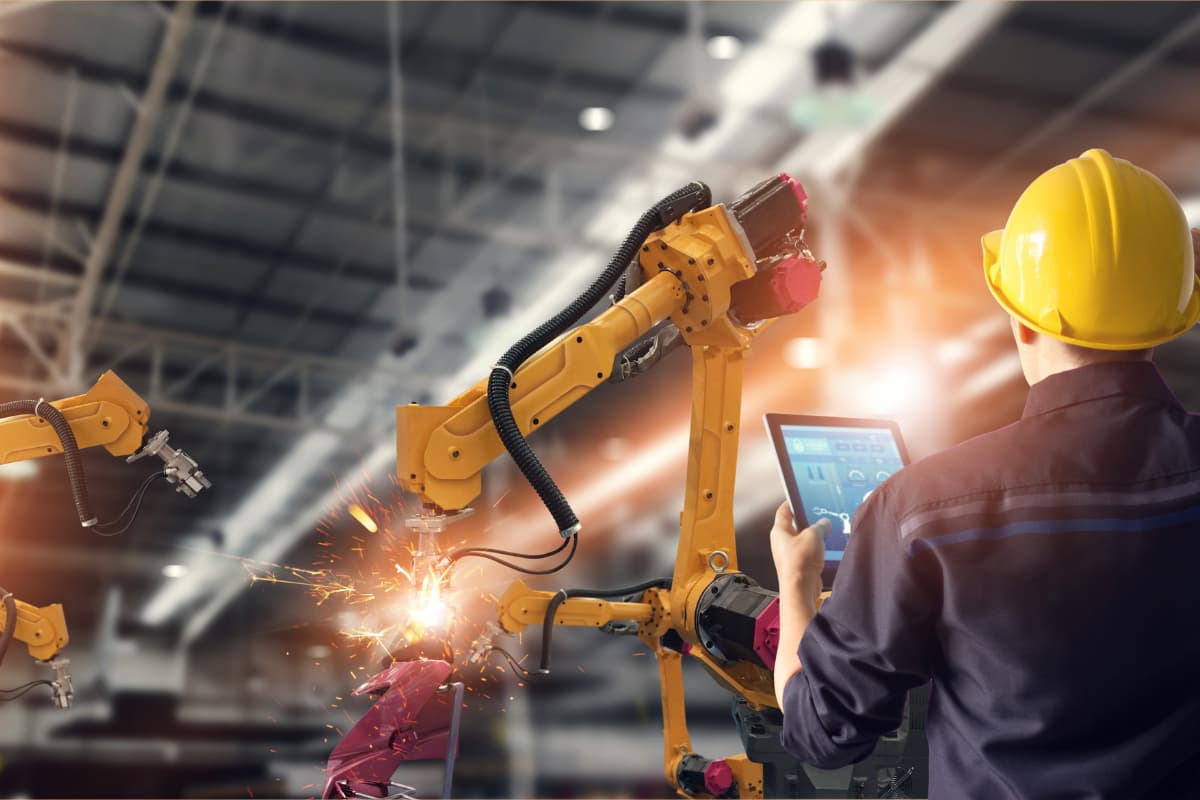
Mechanical and industrial engineering works on lower-level control systems and mechanisms, Platt says. These types of systems could include the rotor inside a drone, the steering system in an autonomous car, or a “traditional” robot that completes a single task, such as a robotic arm on an assembly line. Designing these systems requires an emphasis on stability and safety, especially if systems will be used alongside humans.
Electrical and computer engineering looks at how the high- and low-level control systems come together. This work involves developing protocols for system integration. In some cases, there is an overlap between this discipline and computer science within the robotics field, Platt says.
Although responsibilities in specific roles will vary, there are several universal skills all robotics professionals should have. Individuals with these skills will achieve great success in robotics engineering and have a wide range of careers to choose from.
Robotics manufacturer Robotiq describes mathematics as one of the only core robotics skills that you cannot learn as you go along. At a minimum, a strong background in several branches of mathematics and science are critical for a successful career in robotics:
While a career in robotics requires knowledge of popular programming languages such as C, C++, Python, and Java, there are some key differences between programming for robotics and programming to develop software or mobile applications.
Robotics is largely technical work, but certain soft skills are beneficial, Platt says. In particular, being a team player is essential. “You want to be someone with valuable skills,” such as the ability to write complex AI algorithms, “but you need to be someone who can also work on a team.”
Unless you work at a small startup, Platt adds, you can expect to be working with five or six other engineers, a project manager, product developers, and a user experience expert. You can also expect the team to follow an Agile project management style, with an iterative process for developing, testing, and getting feedback on a product.
Designing and building functioning technical systems is obviously a critical robotics skill, but it’s just as important to be able to figure out why a system isn’t functioning properly. If it’s a mechanical issue, you’ll need to know the best practices for making a repair. If it’s a software issue, you’ll need to be ready to look for errors or bugs in the code. And if it isn’t immediately clear what the issue is, you’ll need to put your problem-solving skills to work to assess the situation and find a possible solution.
In many cases, problem-solving in robotics can be a matter of trial and error. In addition to practicing persistence, you can build your problem-solving skills through experience. An experiential learning program, such as the Master of Science in Robotics program in the Northeastern University College of Engineering, provides students access to advanced on-campus laboratories and research centers, as well as industrial partners such as Boston Dynamics, iRobot, and the Toyota Research Institute.
A little bit of creativity can go a long way for a robotics professional. It can be beneficial for solving problems, such as using an existing part in a new way or coming up with a brand-new design altogether. Creativity and teamwork go hand in hand, too—a willingness to work with others and accept their contributions can help the entire team come up with a new idea or different solution.
Creativity can also boost your marketing and business development skills. Computer-assisted design and drafting (CADD) software company Autodesk notes that these are particularly valuable commercial skills for a robotics engineer who has designed a new product. In addition to describing the technical benefits of a product, you’ll need to convince sales staff, marketers, executive leaders, and ultimately customers that your product is worth their time and money.
The field of robotics is always changing. There are new programming languages to learn, new AI concepts to test, and new and more durable materials to work with. A robotics engineer can demonstrate their value by constantly learning about these changes and applying them to new fields of robotics.
One example is telepresence robots that can be operated remotely and are able to move, speak, and listen. The news site Robotics Tomorrow describes a number of use cases, such as attending a class or meeting halfway across the world, monitoring the conditions of patients in a hospital or nursing home, or moving heavy or hazardous materials across a manufacturing facility. These types of robots have the potential to change the way the world works and learns, but building and maintaining them will require new designs, engineering techniques, and software programs.
One of the most effective ways to gain these skills is by pursuing an advanced degree, like Northeastern’s Master of Science in Robotics. Through a technically challenging curriculum, hands-on learning, and industry co-op placements, you can gain a comprehensive understanding of these robotics skills to help you stand out in the field and make a transformative impact on society.
To learn more about getting the experience you need for a successful career in robotics, click on the banner below to explore the program page.
Editor’s Note: This post was originally published in August 2020. It has since been updated for relevance and accuracy.
September 11, 2020
Are you curious about starting a career as a robotics engineer? Here is a look at the steps you can take now to break into the field.
September 2, 2020
A graduate degree in robotics is all but required for professionals in this evolving field.

January 28, 2024
From building your professional network to increased salary potential, a graduate degree can have a significant impact on your career.