
School Psychology vs School Counseling: What’s the Difference?
August 9, 2024
School psychology and school counseling are similar, but have several key differences. Learn about these differences and how to choose a career path.

By Michael Boyles
October 18, 2024
School psychology is an exciting and fast-growing field. To properly position yourself as a school psychologist, you’ll need to understand the unique educational requirements of this career path. Although school psychologists aren’t required to obtain a doctoral degree, licensure involves more than a typical one- or two-year master’s program.
The good news is that many master’s programs in school psychology provide the educational requirements needed to obtain licensure. Here’s an overview of the jobs you can expect to find with a master’s degree in school psychology.
School psychology is an area of applied psychology in which professionals collaborate with teachers and families to support students’ mental and academic well-being. It’s a rewarding career that’s growing in demand as the need for mental health support in schools increases. The current average growth rate of employment for psychologists, including school psychologists, is 7%.
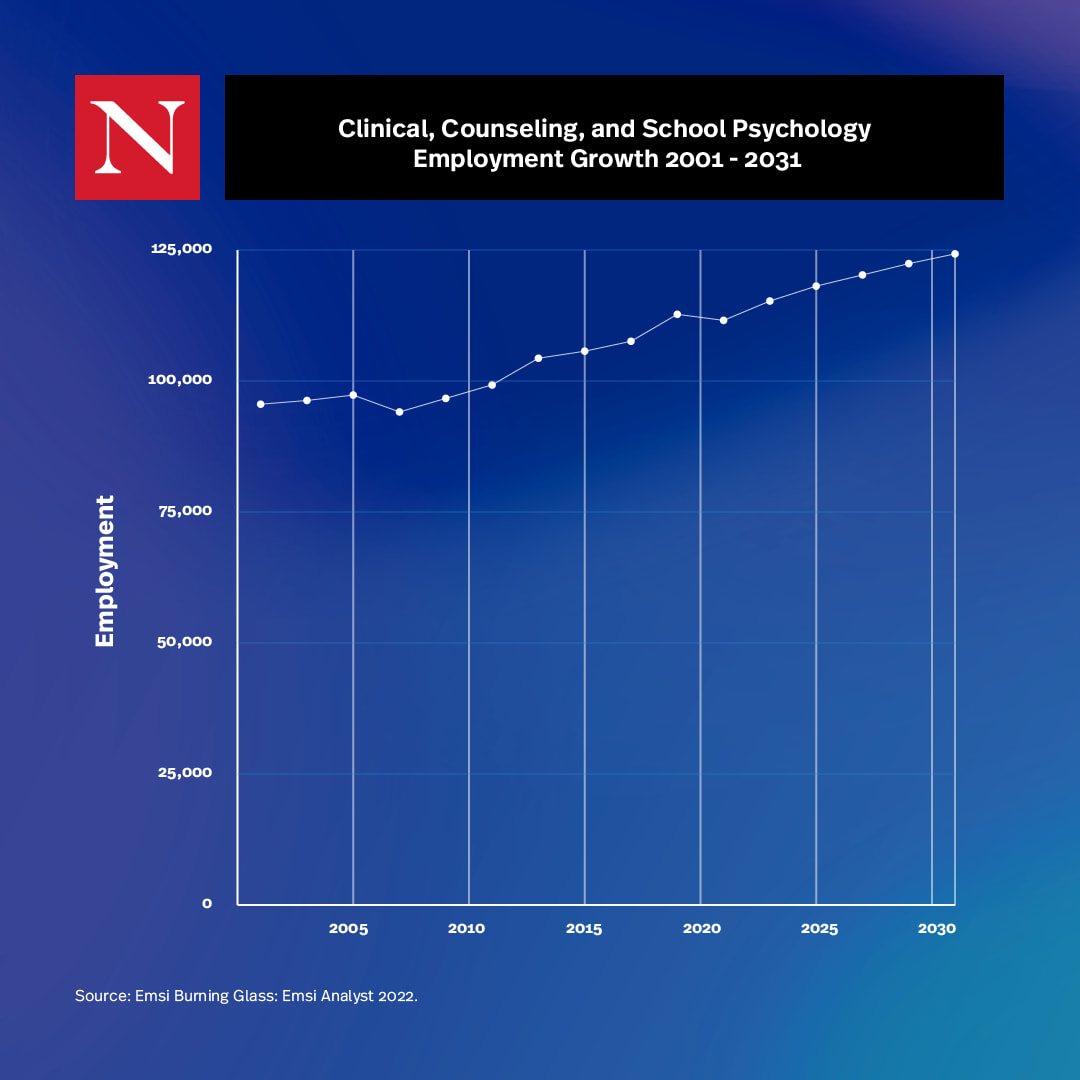
With this influx of job opportunities, school psychologists shouldn’t expect these positions to look the same across the board. This is because school psychology can’t be put in a box, as no two days are exactly alike.
While responsibilities can differ, one commonality that most school psychologists share is their support of students in one-on-one or group settings. Unlike many other psychology careers that focus on addressing concerns after they have arisen, school psychology emphasizes preventative intervention as well.
School psychologists are typically responsible for the following duties:
A master’s degree alone in school psychology won’t prepare you for very many jobs in the field. To become a certified school psychologist, most states require an MS in School Psychology plus 30 additional credits in the form of an Education Specialist (EdS) degree or Certificate of Advanced Graduate Studies (CAGS).
In total, most accredited master’s degree programs take three years to complete. This means that prospective school psychologists can find themselves working as licensed school psychologists within seven years of graduating high school.
The majority of graduates from a school psychology program are able to immediately secure roles as school psychologists post-graduation. In fact, many accredited programs, such as Northeastern University’s MS/CAGS in School Psychology, equip students with the experience and credentials they need to move straight into the field following graduation. Therefore, many students receive job offers before they’ve even received their diploma. This can be reassuring to prospective graduates who are eager to start their careers as soon as possible.
Years down the road, however, there are additional career options school psychologists can obtain with additional coursework or certificates. While many graduates choose to remain school psychologists for the duration of their careers, some pursue advanced job opportunities within the educational sector or even outside it.
Here are the most common job titles listed within the field of clinical, counseling, and school psychology:
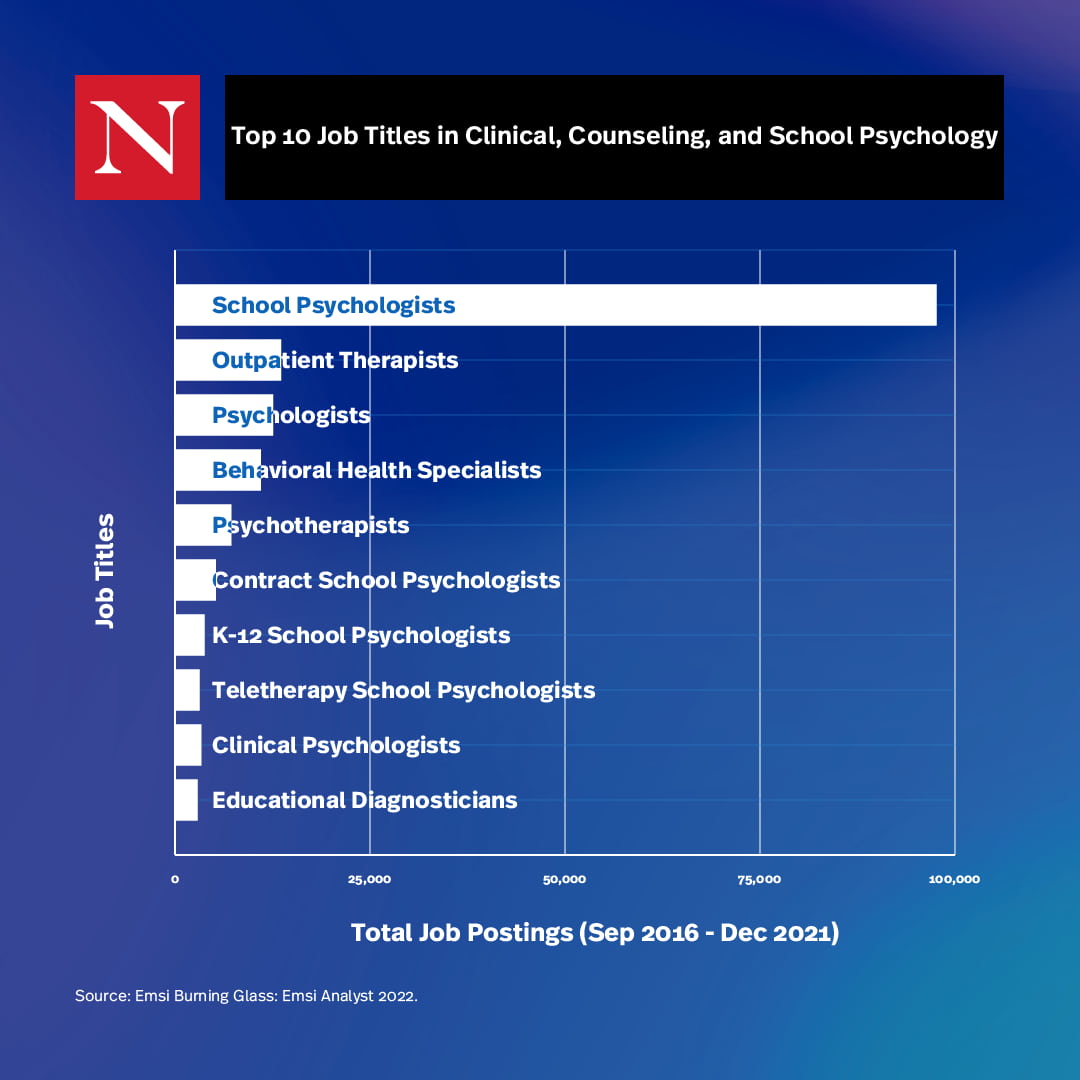
These career paths each require varying levels of education, depending on the route you wish to take and the state you work in. However, most careers in school psychology typically require an accredited master’s program in the field.
Approximately 81% of school psychologists work in public schools. This is mainly due to the increasingly high demand for school psychologists in public education, and this demand will only get higher if the current school psychologist shortage continues. Graduates of master’s programs in school psychology typically work in the following industries:
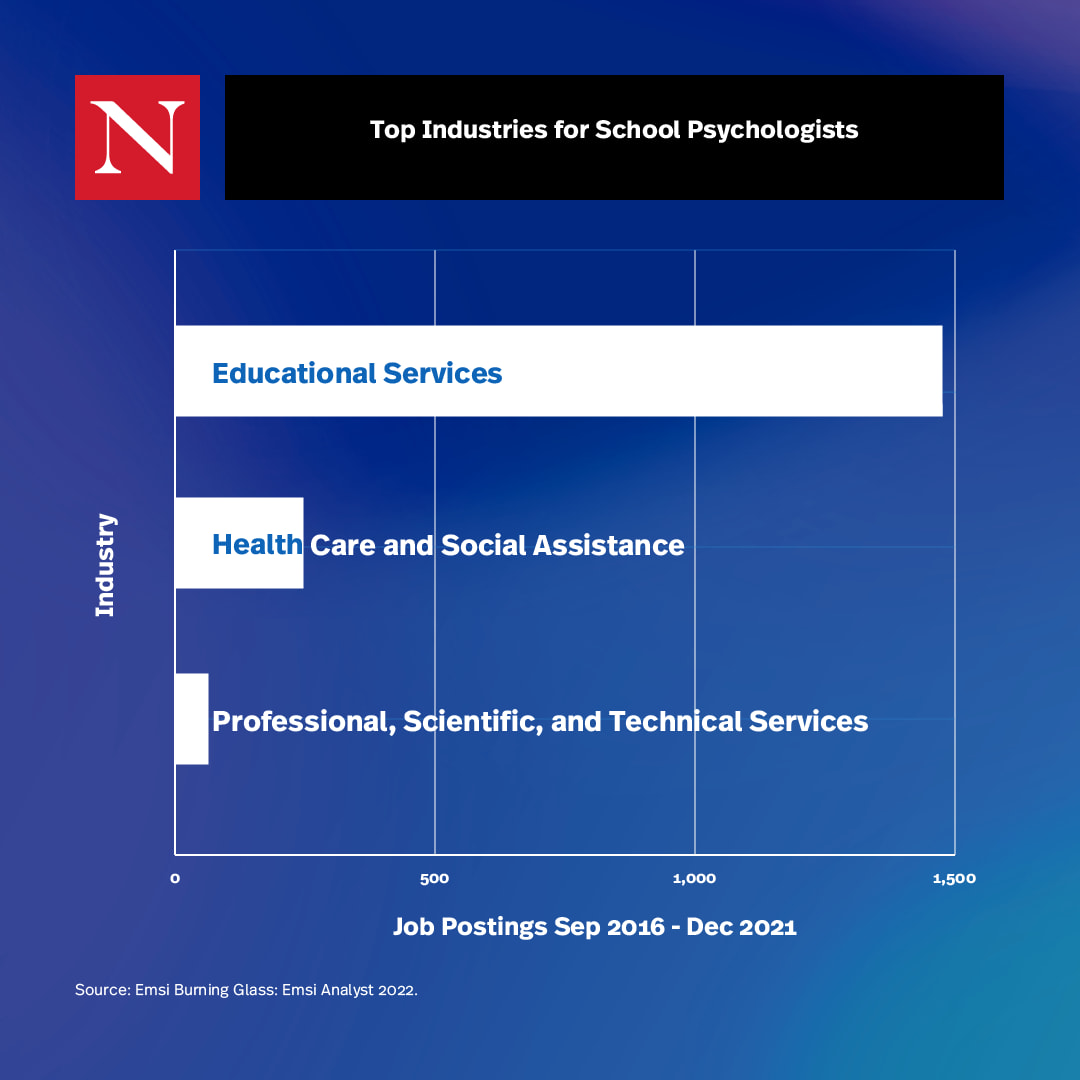
As was previously mentioned, most school psychologists elect to work in a public school setting, giving them access to an extensive pool of students to work with, as well as their families. However, they can also work in other settings. Some of the most common school psychology work settings include:
Public schools are required to have school psychologists on hand, which is another reason why most school psychology graduates opt to work in a public education setting. Depending on the size and location of the school, they might work in individual buildings within a school or with an entire school district.
Are you considering school psychology because you love working with children? If so, it’s crucial to understand that while school psychologists do work with students, they’re also responsible for collaborating with teachers and parents. Here are some of the populations most frequently served by school psychologists.
Most school psychologists work with students between the ages of 3 and 21, from preschool all the way through college. You can choose to focus on a specific age range if you particularly enjoy working with a certain group of students or see students of any age in your practice as well.
One of the lesser-known functions of school psychologists is the support they offer teachers. They’re often called to help teachers with student behavior management in the classroom or support teachers experiencing burnout. It’s important for school psychologists to provide an environment that supports the mental and academic well-being of students and teachers alike.
Since school psychologists work with students, it only makes sense that they also communicate with parents. Interventions to support students’ mental health aren’t as effective if they’re not instituted at home. School psychologists educate parents on mental health practices and help them address behavior management issues with their children. They also interact with parents to obtain information about a student’s history and functioning at home to better inform their therapeutic interventions.
School psychologists also work with other mental health professionals within the educational setting. For example, school psychologists may collaborate with school counselors or social workers to address a student’s specific needs.
Although school psychology graduates qualify for jobs outside of the education sector, a master’s degree in school psychology prepares you best for a job as a school psychologist. The first step to becoming a school psychologist is to complete a master’s program accredited by the National Association of School Psychologists (NASP). Once complete, it’s time to apply for jobs.
An accredited program will equip you with the various skills needed to obtain a position in the field. Looking at a variety of school psychologist job postings, here’s a list of the top skills required for a position in school psychology:
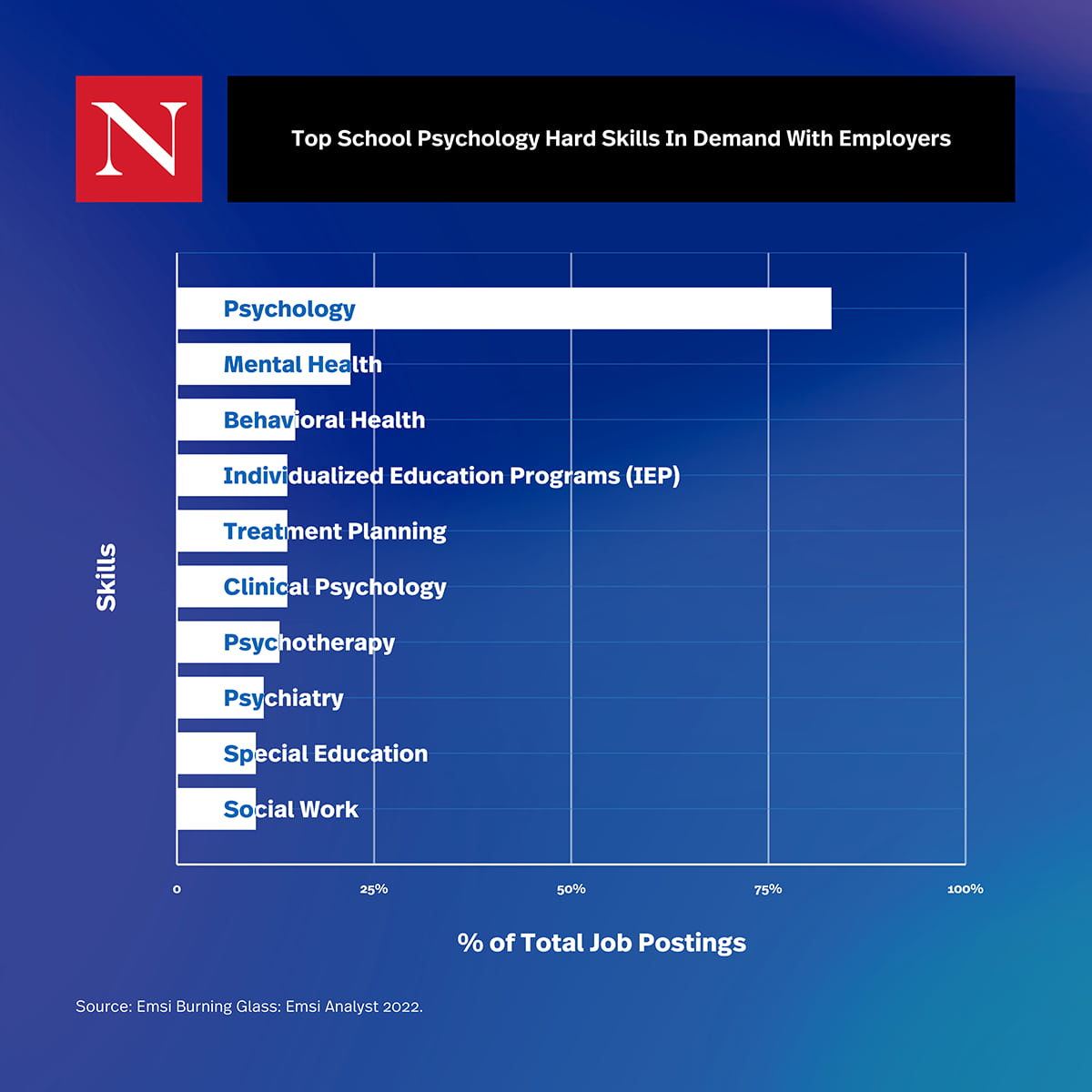
To get the right skills needed for a career in school psychology, it’s important to look for a master’s and certificate program that’s accredited by NASP, like Northeastern’s. While some school psychologists opt for a doctoral degree as well, it’s not a requirement. Since school psychologist requirements vary by state, it’s important to conduct thorough research on qualifications needed in your state.
Most states will require a three-year master’s degree program that includes an EdS or CAGS. A 1,200-hour internship is also required for licensure—at least 600 of which must be completed in a school setting.
Programs such as Northeastern’s MS/CAGS in School Psychology equip students with everything they need to move into the field immediately following graduation. This is mainly due to the fact that Northeastern’s graduation requirements align with those of NASP, positioning students for immediate success.

Editor’s note: This post was originally published in May 2022. It has since been updated for relevance and accuracy.
August 9, 2024
School psychology and school counseling are similar, but have several key differences. Learn about these differences and how to choose a career path.

May 31, 2021
Race, ethnicity, socioeconomic status, and gender identity can all influence mental health. Multicultural counseling acknowledges this fact.

August 5, 2022
School psychologists are in high demand, but make sure your degree matches your goals. Explore the difference between a master’s and PhD program.